
Not Another “Work Smarter” AI Article Let’s get this part out of the way: I’m not here to tell you...
OpenAI started testing ads inside ChatGPT in February 2026. By May, self-serve access opened to any business. Here's what the ad unit actually is, who's in the audience, what it costs, and where it makes the most sense to test first.
Overview
ChatGPT ads launched on February 9, 2026, in the US, starting with a small group of enterprise advertisers. By May 5, OpenAI removed the spending minimum entirely and opened a self-serve Ads Manager to any business.
By plan tier, per OpenAI's Help Center, ads may appear for users on the Free and Go plans. Plus, Pro, Business, Enterprise, and Edu accounts are ad-free, full stop. That split matters more for some businesses than others, more on what it means for B2B later in this article.
Geographically, the rollout started in the US and is expanding to the UK, Canada, Mexico, Australia, and New Zealand.
What kind of ads are these, and what can you actually track?
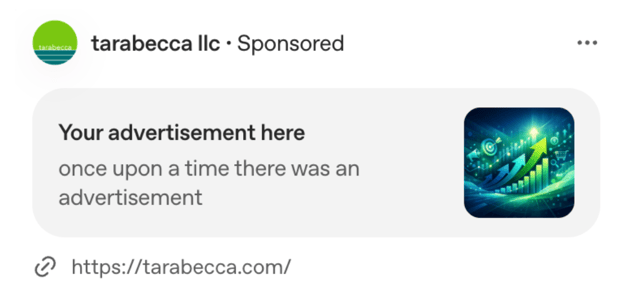
The ad itself is a small "Sponsored" card that appears below a ChatGPT response, logo, headline, optional description, and image, clearly labeled and visually separated from the chat itself.
Two campaign objectives are live right now: Clicks, where the lever is max CPC, and Reach, where the lever is max CPM. A third objective, Conversions, is listed as "coming soon" as a native goal. That said, conversions aren't untrackable in the meantime. A pixel plus a dedicated thank-you page for any form-fill conversions gives a clean, manual way to measure them today, well before OpenAI ships a native conversion objective.
How much do ChatGPT ads cost, and is now a good time to test?
Pricing has moved fast, and in one direction. According to eSEOspace and Briefs, the CPM that started around $60 at launch had dropped to roughly $25 by May, with CPC bidding now running around $3 to $5. Both figures are early and self-reported, but the direction is consistent: cheaper and more open than it was three months ago.
eSEOspace also points out that this pattern mirrors Google Ads in the early 2000s and Facebook Ads around 2013 to 2015: advertisers who showed up early locked in rates well below where those platforms eventually settled, before competition caught up and the auction did what auctions do. ChatGPT's CPM drop from $60 to $25 in three months looks like the same early signal. None of this guarantees performance for any specific business, but every major ad platform has rewarded the businesses willing to learn on it before the playbook existed.
How do you actually set up a campaign?
Setting up the account. ChatGPT ads run through a separate platform at ads.openai.com, not through a ChatGPT Plus, Business, or Enterprise subscription. Signup requires a business email, legal business name, EIN, physical address, a primary advertising category, and a payment method. Verification typically takes two to four business days. One limitation worth knowing: as of the May 2026 launch, agencies can't create an advertiser account on a client's behalf in the self-serve flow, the client has to create the account first.
Objective and budget. The objective sets the bid type: Clicks runs on CPC (recommended around $3 to $5), Reach runs on CPM (defaults around $60). Separately, advertisers can choose a daily or lifetime budget for new campaigns. You can also track conversions and associate it with a campaign with a pixel-based setup, but this is not yet a campaign goal.
Targeting. Location targeting covers country, state, or zip code, but only by inclusion, there's currently no way to exclude a location. Early reporting points to a heavily 18 to 34 audience on the Free and Go tiers, worth knowing as a channel-level signal even though it isn't something advertisers can target directly.
Topic targeting works in two directions. Context hints are the inclusion side, short, plain-language descriptions written at the ad group level that tell the platform which conversations an ad is relevant to. Platform-level exclusions are the guardrail side, regardless of how an ad is targeted, it won't appear near health, mental health, or political topics, and dating, financial services, and political verticals are excluded from advertising entirely for now.
Before anything serves. Campaigns, ad groups, and ads can all be built and saved, but until account setup and billing are fully complete, every ad sits in a "Not serving" status. A fully built campaign isn't the same as a live one.
What are context hints, and why do they matter so much?
Context hints are the closest thing to keyword targeting on ChatGPT, and they're the field doing the real work.
Instead of a keyword like "best CRM for sales teams," a context hint reads more like "marketing leaders comparing CRM platforms for a 50-person team," a description of a buyer and a moment, not a string to match. Per OpenAI's documentation, hints "guide ad matching" but aren't exact-match keywords and don't guarantee delivery in specific conversations.
That's a looser system than most advertisers are used to, which means this field deserves a thoughtful strategy.
One setup quirk worth knowing: campaigns launch with a single ad group. Additional ad groups, each with their own context hints, can be added once the campaign is live. Treat the first one as the best shot, not a test of everything at once.
What does a ChatGPT ad look like, and how long can the copy be?
Character limits matter here, and the platform is generous about letting copy run long, less generous about showing all of it:
- Headline: the field allows up to 50 characters, but truncation in the preview starts around 24
- Description: the field allows up to 100 characters, but truncation starts around 48
Write for the truncation point, not the field limit. Ten separate test ads were built in a single ad group with no platform-imposed limit on count encountered. If there's a ceiling, it wasn't found here.
Does running ads on ChatGPT lift your other marketing channels too?
Across other platforms, the answer is consistently yes, and the data behind it goes back further than people often realize.
Brainlabs' incrementality studies found that Meta ad exposure drove a 19% increase in incremental search visits, at a cost of $6.78 each, with 71% of those visits landing on organic search rather than paid. A 2021 study cited by Recast found that advertising on YouTube increased branded Google searches by as much as 420%. This isn't a new discovery either. One small-business case study from Eboost Consulting measured daily sales jumping from roughly $78 to roughly $257 during a Facebook ad campaign, while Facebook's own reporting only accounted for about half of that increase, the rest showed up as unattributed lift elsewhere. And in case studies tracking what happens when paid media gets paused, organic search and direct traffic dropped right along with it, evidence the paid spend had been lifting those channels the entire time.
The mechanism holds across every channel it's been measured on: visibility in one place creates demand that shows up as searches and direct visits somewhere else. No published study exists for ChatGPT ads specifically yet, simply because the channel hasn't been around long enough for one. But the behavior driving the lift, seeing something and later searching for it directly, doesn't depend on the platform. If it held for Facebook in its early days, and still holds for Meta and YouTube now, there's a strong case it holds here too.
Track branded search volume and direct traffic during any ChatGPT ads test, not just clicks inside the platform. If a lift exists, that's where it shows up first.
Who should test this now, and why
OpenAI's eligible advertiser categories give a natural starting list, and for these, it's close to an easy yes: household and consumer goods, local services, travel and experiences, and digital products and education. A clothing brand, a local contractor, a travel business, or an online course are advertising into a moment where someone on ChatGPT is already asking, comparing, and close to deciding, at CPMs that have already dropped from $60 to roughly $25, with no minimum spend.
Beyond that list, the "worth testing" group isn't defined by B2B versus B2C so much as by buying behavior: longer sales cycles, heavy comparison and research before a decision, and high enough customer value that even a handful of conversions justifies the test. That's where the B2B audience numbers actually matter. A LinkedIn poll of 100 SaaS and tech marketers run by Omni Lab found that 74% were on a paid ChatGPT plan, and only 26% were on free, meaning the addressable B2B audience here is smaller than the general population would suggest. But that same number cuts the other way too: if most B2B advertisers read "74% of our buyers are ad-free" and skip this channel entirely, the 26% who are reachable may be sitting in front of far less competition than the same audience gets on LinkedIn or Google. Early, cheap, and lightly contested is exactly the combination that rewarded the businesses that tested Google Ads in the early 2000s and Facebook Ads around 2013 to 2015, before either platform's auction filled up.
The practical test checklist
- Have business verification ready before signing up: legal business name, EIN, address, and payment method
- Start with the Clicks objective and CPC bidding for a first test, rather than Reach
- Set a daily budget in the $100 to $300 range and plan to run it for at least two weeks, enough volume to read results
- Write 5 to 15 context hints per ad group, framed as buyer scenarios, not keyword lists
- Get a pixel and a dedicated thank-you page live before launch, not after
- Track branded search volume and direct traffic alongside in-platform clicks, that's where a halo effect would show up first
Curious whether a ChatGPT ads test fits your broader marketing plan? Let's talk >